

Ever thought about what happens to property when someone dies with assets in many states? Ancillary probate is a key legal step many miss until they face estate settlement issues.
So, what is ancillary probate? It’s a special legal process for handling property in a state not where the person lived. It makes sure out-of-state assets are handled right, following the law.
If someone dies with real estate or big assets in another state, their home state’s court can’t handle those properties. The meaning of ancillary probate is key here. It helps manage property transfers between states.
Experts in estate planning say knowing about ancillary probate can save families a lot. It can save time, money, and avoid legal problems during a tough time.
Key Takeaways
- Ancillary probate handles property owned in states outside the deceased’s primary residence
- The process ensures legal transfer of out-of-state assets
- Multiple state probate proceedings may be required for complete estate settlement
- Proper planning can help lessen ancillary probate issues
- Each state has its own rules for ancillary probate
Understanding Ancillary Probate
Probate in different states can be hard for executors and heirs. Ancillary probate is key when someone dies with property in another state. It makes sure assets are handled and shared right.
Defining Ancillary Probate
Ancillary probate is needed when someone dies with property in a state not their own. It’s different from primary probate, which deals with most assets. Ancillary probate is for property in another place.
- Applies to real estate in different states
- Handles out of state probate requirements
- Ensures legal transfer of non-resident property
Importance in Estate Planning
Good estate planning must think about probate in different states. People with property or second homes need smart plans. Planning ahead can make things easier and cheaper for heirs.
Important steps for out of state probate include knowing local laws and making detailed plans. You might also use living trusts to avoid long probate times.
- Reduce legal complexity
- Minimize financial burdens
- Protect beneficiary interests
People with estates should talk to lawyers who know about probate in many states. They can help make plans that fit their property.
When Is Ancillary Probate Necessary?
Managing an estate can be tough, more so when property is in different states. The ancillary probate process is key for estates with assets in other states.
Real estate in another state often needs ancillary probate. Executors must know when this extra legal step is needed for proper estate handling.
Common Scenarios Requiring Ancillary Probate
- Owning vacation homes in different states
- Holding investment properties across state lines
- Possessing business assets in multiple jurisdictions
- Inheriting out-of-state real estate
Types of Property Typically Involved
The ancillary probate process deals with various property types outside the deceased’s main state:
- Real Estate: Homes or business places
- Vehicles registered in different states
- Tangible personal property with big value
- Business interests in other state jurisdictions
Knowing the rules for probate real estate in another state is vital. Each state has its own rules for property transfer and estate handling. Getting help from experts is a must.
Not all out-of-state property needs ancillary probate. Some states have easy procedures for small estates or special rules that make transfers simpler.
The Process of Ancillary Probate
Handling multi-state estate probate can be tricky. It gets even harder when dealing with properties in different places. Ancillary probate is a key legal tool for managing assets in other states during estate settlement.
The ancillary probate process has many steps. Executors must follow these steps carefully to distribute assets correctly across state lines.
Initial Filing Requirements
To start an ancillary probate example, executors need to do a few things:
- File a petition in the secondary state where property is located
- Submit certified copies of the original will
- Provide the deceased’s death certificate
- Request appointment of a local representative
Documentation Checklist
For successful multi-state estate probate, you need a lot of documents:
- Original will and codicils
- Probate court documents from primary jurisdiction
- Death certificate
- Letters testamentary or letters of administration
- Inventory of out-of-state assets
Every state has its own rules. So, getting help from a professional lawyer is very important.
Key Differences Between Ancillary and Primary Probate
Probate can be hard to understand, like when dealing with properties in different states. Ancillary probate has its own rules that are different from primary probate. It needs a good grasp of foreign probate laws and legal details.
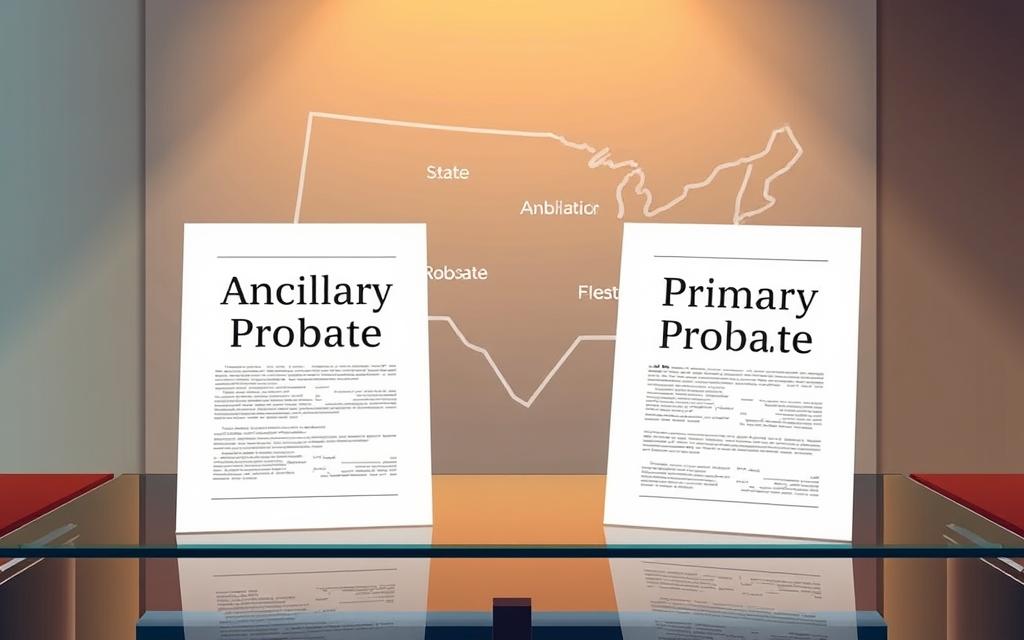
The probate process is different for primary and ancillary cases. Primary probate deals with the estate in the decedent’s home state. Ancillary probate handles properties in other states.
Jurisdictional Variations
Jurisdiction is key in ancillary probate. Each state has its own laws and rules for settling estates.
- Primary probate occurs in the deceased’s home state
- Ancillary probate handles out-of-state property assets
- Different state laws govern respective probate proceedings
Ancillary Probate Timeline Considerations
The timeline for ancillary probate is longer and more complex than primary probate. It depends on communication between states, property value, and state rules.
| Probate Type | Average Duration | Complexity Level |
|---|---|---|
| Primary Probate | 6-12 months | Moderate |
| Ancillary Probate | 9-18 months | High |
Executors must handle foreign probate rules well to settle estates smoothly across states. Knowing these differences helps make the ancillary probate process easier and avoids legal issues.
Navigating State Laws for Ancillary Probate
Handling probate real property in another state is tricky because of different laws. Executors need to carefully follow the rules for secondary probate filing. This ensures the estate is managed well in different places.
Every state has its own probate laws. These laws affect how ancillary probate works. It’s important to know these differences for good estate management.
State Law Variations to Consider
- Jurisdictional requirements differ across states
- Filing deadlines can vary dramatically
- Documentation standards may change by location
- Property valuation methods differ
Key Executor Considerations
Executors dealing with probate in another state face big challenges. They need to do lots of research and get help from experts. This helps avoid problems during secondary probate filing.
| State Characteristic | Potential Impact on Probate |
|---|---|
| Probate Court Procedures | Can extend processing time |
| State Tax Requirements | May create additional financial obligations |
| Property Transfer Rules | Might require specific documentation |
To manage ancillary probate well, executors should:
- Research specific state probate laws
- Consult local legal professionals
- Maintain detailed documentation
- Understand possible tax issues
Being ready and getting help from experts is key for dealing with out-of-state probate.
How to Avoid Ancillary Probate
Managing out-of-state property needs smart planning. Getting help with real estate probate is key to avoid costly ancillary probate. Owners can use several strategies to manage their estates well and keep their assets safe.
Strategic Estate Planning Approaches
An expert in ancillary probate can suggest many ways to avoid extra probate. The best methods include:
- Creating revocable living trusts
- Setting up joint ownership with survivorship rights
- Using transfer-on-death deeds
- Setting up payable-on-death accounts
Trust-Based Solutions
Trusts are a strong way to dodge ancillary probate. By putting property in a trust, people can:
- Keep control over their assets
- Skip the probate court
- Make clear who gets what
- Lessen legal issues
| Strategy | Probate Avoidance | Complexity |
|---|---|---|
| Revocable Living Trust | High | Moderate |
| Joint Ownership | Medium | Low |
| Transfer-on-Death Deed | Medium | Low |
Getting professional advice is very important. Talking to a specialized ancillary probate lawyer can help create plans that fit your needs.
Legal Responsibilities of Executors in Ancillary Probate
Executors have big legal jobs when dealing with probate across borders. They manage the estate’s assets in more than one place. This is called ancillary probate.
Executors have to do many important things when handling real estate in different states:
- File necessary documentation in the secondary state’s probate court
- Inventory and protect out-of-state assets
- Comply with local state legal requirements
- Communicate with multiple jurisdictional authorities
Executor Duties in Detail
The main job of an executor is to take care of the estate’s assets in different states. Probate across borders means they have to know the laws of each place. They need to get the right papers, like death certificates and wills.
Potential Legal Liabilities
Executors can get in trouble if they make mistakes. They could lose money personally. Some big risks include:
- Improper asset distribution
- Failure to pay required taxes
- Neglecting creditor notifications
- Missing statutory filing deadlines
Getting help from a lawyer is very important. They can help with the hard parts and lower the risk of problems in ancillary probate.
Common Challenges in Ancillary Probate
Managing estates across state lines can be tough. Executors face many challenges when dealing with probate in different states. These challenges can make the process harder than expected.
Executors often run into big problems with ancillary letters of administration:
- Jurisdictional complexities between different state legal systems
- Varied documentation requirements
- Communication barriers between multiple courts
- Extended processing times
Delays in the Probate Process
Delays are a big problem in ancillary probate. Unfamiliarity with out-of-state legal procedures can slow things down a lot. Executors need to know each state’s probate rules well to avoid delays.
Disputes Among Heirs
Family fights can get worse when states are involved. Issues like property sharing and understanding estate documents can lead to long legal battles. These battles can make the probate process even longer.
- Geographic distance complicates communication
- Different state laws may create interpretation challenges
- Potential misunderstandings about inheritance rights
Getting help from a lawyer can make things easier. They can help executors deal with these problems and make the estate process smoother.
The Role of a Probate Attorney
Filing ancillary probate is complex. Probate attorneys guide you through it. They know all about probate laws in different places.
They help with estate management. They know how to handle property and legal stuff.
Importance of Legal Guidance
Probate attorneys are very helpful. They know a lot about estate settlement. They help in many ways:
- They understand probate laws well.
- They spot legal problems early.
- They protect the rights of those who inherit.
- They help lower taxes.
Selecting the Right Probate Attorney
Choosing the right lawyer is important. Look at these things:
| Evaluation Criteria | Key Considerations |
|---|---|
| Experience | Years of probate law practice |
| Specialization | Focus on ancillary probate cases |
| Local Knowledge | Understanding of state-specific regulations |
| Communication | Clear, responsive interaction |
Good legal help makes filing ancillary probate easier. It helps families deal with estate settlements better.
Impact of Ancillary Probate on Heirs

Dealing with ancillary probate can be tough, even more so with out-of-state property. It brings financial and emotional hurdles. Knowing the laws about probate property is key.
Heirs often meet unexpected problems in ancillary probate. A guide for out of state executors is very helpful in these complex legal matters.
Financial Considerations for Heirs
The money side of ancillary probate can be big. Heirs face many money problems:
- More legal and admin costs
- Taxes in different states
- Longer waits for getting assets
- Extra court fees for out-of-state property
Emotional Factors in Probate
Ancillary probate also brings emotional stress. Dealing with complex legal stuff while grieving is hard.
Some big emotional challenges are:
- Family fights over assets
- Not knowing when property will be transferred
- Hard to talk between executors and heirs
- Disagreements on managing the estate
Knowing the laws about probate property helps families deal with these issues. It makes the process clearer and less stressful.
Costs Associated with Ancillary Probate
Going through the U.S. probate system can be hard on your wallet. This is true for snowbirds with homes in different states. Ancillary probate adds more costs that can really affect how much it costs to settle an estate.
Understanding Judicial Fees and Charges
When it comes to ancillary probate, there are several important costs to think about. These costs can change a lot based on the state and how complex the estate is.
- Filing fees for out-of-state property documents
- Court administrative charges
- Mandatory probate court appearances
Breaking Down Attorney Fees
Getting a lawyer is key for snowbirds dealing with probate. Lawyers who handle estates across states charge in different ways.
| Fee Type | Estimated Cost Range | Influencing Factors |
|---|---|---|
| Hourly Rate | $250 – $500 per hour | Complexity of estate |
| Flat Fee | $1,500 – $5,000 | Estate size and property location |
| Percentage-Based Fee | 2% – 4% of estate value | Total estate worth |
To cut down on costs, snowbirds should keep their documents clear and know the probate rules in each state. Planning your estate ahead of time is the best way to save money.
Timeframe for Completing Ancillary Probate

Understanding the estate probate process is key. It involves knowing the timeline for ancillary probate. This time can change a lot based on several important factors.
The time for ancillary probate can be different for everyone. It can take from a few months to up to two years. Each case has its own challenges that affect how fast it moves through the legal system.
Key Variability Factors
- State-specific legal requirements
- Complexity of the estate assets
- Number of possible beneficiaries
- Potential legal disputes among heirs
- Volume of out-of-state property holdings
Typical Processing Timelines
The estate probate process for ancillary probate usually follows these timelines:
- Simple estates: 3-6 months
- Moderately complex estates: 6-12 months
- Complicated estates with disputes: 12-24 months
Executors can speed up the process. They can do this by keeping documents organized, talking clearly with beneficiaries, and working with skilled probate lawyers. These lawyers know the laws of each state.
Planning ahead and knowing these timeline factors can help families. It can make the estate settlement process less stressful.
Tax Implications of Ancillary Probate
Understanding taxes in ancillary probate is tricky. It involves knowing state rules and possible money problems. When an estate has property in many places, taxes get even harder to deal with.
Knowing about ancillary probate taxes helps those handling the estate. Each state has its own estate and inheritance taxes. This makes things very complicated.
Estate Taxes Across State Lines
Estate taxes change a lot from state to state. Some important things to think about are:
- How much you need to pay taxes on
- The tax rates in each state
- The risk of paying taxes twice
Inheritance Tax Considerations
Inheritance taxes in other states add more trouble. People getting things from the estate need to think about:
- How they’re related to the person who died
- How much they’re getting
- The laws on inheritance taxes in that state
Getting help from a tax expert is a good idea. They can help plan to avoid big tax problems.
| State | Estate Tax Threshold | Maximum Tax Rate |
|---|---|---|
| Massachusetts | $1 Million | 16% |
| New York | $5.93 Million | 16% |
| Oregon | $1 Million | 10% |
Every case of ancillary probate has its own tax issues. With good planning and expert advice, you can handle these problems well.
Real Estate and Ancillary Probate
Handling probate real estate in another state is hard for executors and heirs. Out-of-state properties need extra legal steps. These steps need careful planning and attention.
Getting help with real estate probate is key for properties not in the deceased’s main state. The ancillary probate process helps move property titles to different places.
Challenges of Out-of-State Property Management
Managing real estate in another state during probate is tough. Executors face many challenges. These include:
- Understanding local state property laws
- Navigating different court systems
- Managing possible tax issues
- Working with local lawyers
Title Transfer Processes
Transferring titles needs several important steps:
- Get certified copies of the death certificate
- File ancillary probate in the property’s state
- Make sure the will is valid in the local area
- Fill out all needed property transfer papers
Pro tip: Talking to a local real estate attorney who knows probate can make the out-of-state property transfer easier. It can also avoid legal problems.
Executors should stay active in learning about state-specific rules. This helps make sure the property moves smoothly and follows local laws.
Resources for Further Understanding Ancillary Probate
Understanding ancillary probate can be tough. You need good resources and expert advice. This is true for executors, beneficiaries, or anyone wanting to learn about legal matters.
There are many resources to help you. They make the ancillary probate process clearer. They also offer important help for real estate issues.
Recommended Readings
- Estate Planning Essentials by Alexander Bove – A detailed guide to probate
- The Executor’s Guide by Mary Randolph – Great for managing estates
- American Bar Association’s Probate Law Resources – Legal books you can trust
Professional Organizations and Support
| Organization | Specialty | Contact Resources |
|---|---|---|
| National Association of Estate Planners & Councils | Comprehensive Estate Planning | www.naepc.org |
| American College of Trust and Estate Counsel | Advanced Legal Guidance | www.actec.org |
| Estate Law Institute | Ancillary Probate Expertise | www.estatelawinstitute.org |
Finding a good ancillary probate lawyer is key. They know the laws in different states. They can help a lot with real estate issues.
Online Learning Resources
- Coursera’s Estate Planning Courses
- LinkedIn Learning Legal Education Modules
- National Probate Webinars
Keep learning and get professional advice. It’s important for handling ancillary probate. Spending time on learning can help avoid problems.
Conclusion: Ensuring Smooth Ancillary Probate
Going through the estate probate process can be hard, even more so with ancillary probate. Knowing the legal rules helps those handling out-of-state property. Each state has its own rules that need careful thought and planning.
Managing an estate well means being proactive to avoid problems. Experts in probate law offer important advice. They help spot issues and plan well for the ancillary probate process.
Final Thoughts on Effective Planning
Getting an estate settled right needs good planning, clear talks, and knowing state laws. Executors should collect all property records, keep open talks with heirs, and get legal help for tough cases.
Encouragement to Consult Professionals
This guide gives good info on ancillary probate, but every estate is different. Getting help from probate lawyers and financial advisors can make things easier. They know how to make the process smoother and protect everyone’s interests.

